What Questions Can a Business Ask About a Service Dog (and What’s Off-Limits)

When your employees are dealing with the general audience, they require a template on what a business can ask about a service dog. The ADA draws a distinct boundary; inquire about whether the dog is needed due to a disability and what it does. Do not demand documentation or medical information. Standardize the wording and put the script somewhere the staff can see it.
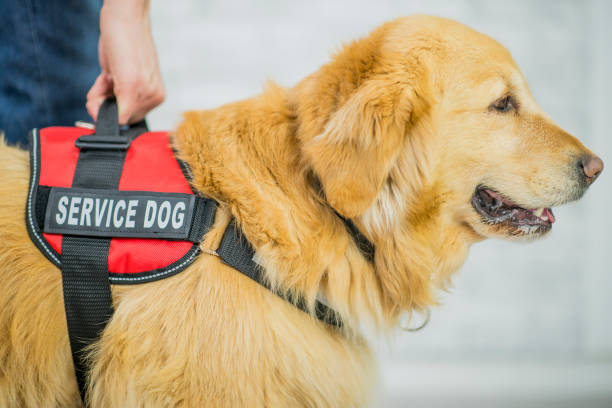
Image Credit: Pexels

When it is not obvious that the dog is a service animal, staff may ask only two questions: Is the dog required because of a disability? What work or task has it been trained to perform? Do not ask about the person’s condition, request papers, demand a demo, or charge pet fees. Remove the dog only if it is out of control or not housebroken, and still serve the customer.

Off-limits Topics and Actions

Under the ADA guidelines for service animals, you may not ask about a person’s disability, demand medical details, request papers or an ID card or require a task demonstration. There is no federal certification to check. Always stick to the script and ensure the interaction is not long. Service animals should not be treated as accessible emotional support animals without being trained to work. Your written service animal rules for businesses should state that clearly.

The only two questions you may ask

In cases where it is not clear that the dog is a service animal, the staff can ask only two ADA service dog questions to be answered:

  1. Does the dog have to be a service animal due to a disability?
  2. What is the job or task that the dog has been trained to do?

Stop there. Do not add follow-ups or quizzes. Make the two ADA service dog questions part of onboarding and post them in staff areas so the script never drifts.

When can you exclude a dog

You can request the removal of the animal only when the dog is not on a leash and the trainer does not rebuke it, or it is not a house pet. Even in the case of removal, you still need to provide the person with your goods or services without the animal. Allergies or fear of dogs are not valid reasons to deny entry; separate seating is the right fix. These points answer what can businesses ask about service dogs and when action is allowed.

Quick policy checklist

  • Post the two-question script at registers and host stands.
  • Add a one-page policy to onboarding and refresh it yearly.
  • Document incidents in neutral language.
  • Apply your service animal rules for businesses uniformly across locations. Consistency prevents complaints and keeps the team confident.

FAQ

1. Can a business ask for papers or an ID card for a service dog?
No. There is no federal certification or ID you can require. You may only ask the two questions above, in line with ADA guidelines for service animals. Do not request medical records or a task demo.
2. Can allergies or fear be used to deny access to a service dog?
No. Allergies and fear are not valid reasons to refuse entry. If needed, create distance between parties, but do not block a trained service animal. Align staff responses with your service animal rules for businesses to keep outcomes consistent.
Rights of Service Animals in Public Places, Housing & Travel

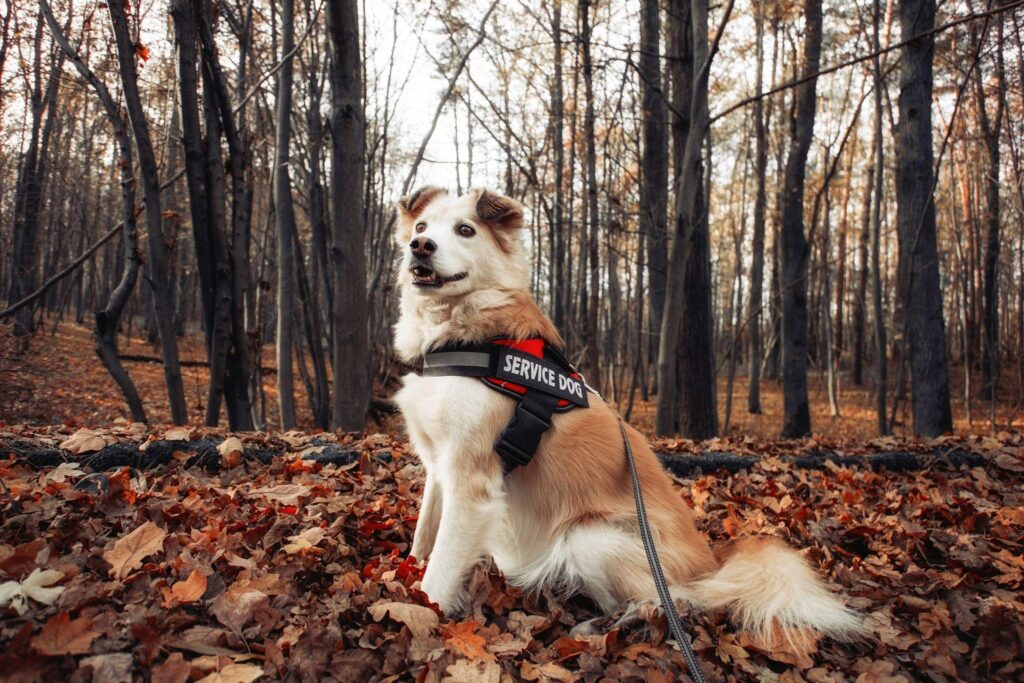
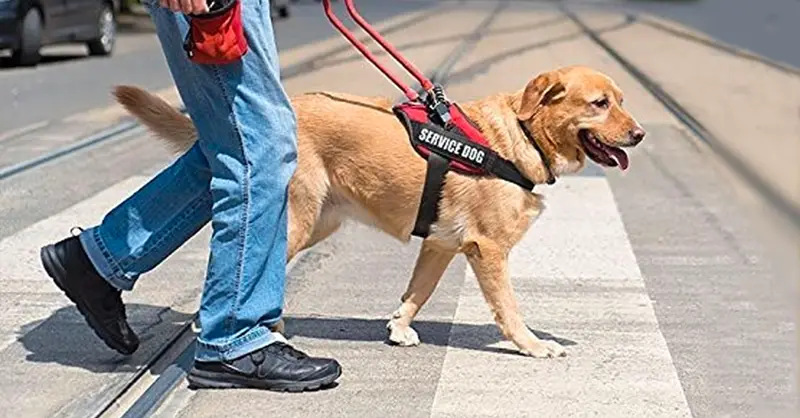
Service animals are working partners, not pets. Under federal law, a service animal is a dog trained to do work or perform tasks for a person with a disability. Emotional support animals are not covered by these rules. That single distinction drives what access is guaranteed in public places, housing and air travel.

Image Credit: Unsplash

Service animals are working partners, not pets. Under federal law, a service animal is a dog trained to do work or perform tasks for a person with a disability. Emotional support animals are not covered by these rules. That single distinction drives what access is guaranteed in public places, housing and air travel.

Public places

In businesses and state or local government facilities, the Americans with Disabilities Act requires staff to admit service dogs anywhere the public can go. If it is not obvious, the dog is a service animal, staff may ask only two questions. Is the dog required because of a disability? What tasks has the dog been trained to perform? Staff cannot demand papers, reveal medical details, or make the dog perform a task on the spot.

Housing

The Fair Housing Act covers most rental properties, condos, HOAs and university housing. A task trained service dog is a reasonable accommodation, not a pet. There is no pet fee and deposit charged or weight and breed restrictions on landlords. Assuming that disability or need is not apparent, a housing provider might request credible records that you have a disability and that the dog assists you. They cannot demand medical records.

Air Travel

Airlines follow the U.S. Department of Transportation’s service animal rule under the Air Carrier Access Act. Only dogs qualify as service animals. Emotional support animals are treated as pets. Airlines may require the DOT Service Animal Air Transportation Form and for flights longer than eight hours, a Relief Attestation. There is no fee for a service dog.

Handler Responsibilities

Handlers are expected to keep the dogs leashed, harnessed or tethered except when a task demands otherwise, then voice or signal control is necessary. Dogs have to be housebroken, not violent and also secure in crowded areas. Handlers cover damage they cause and follow neutral rules like cleaning, leash areas, and posted safety procedures always.

Enforcement and complaints

If your rights are denied, record names, dates and locations. Ask for the policy in writing and request a supervisor. For public places, file an ADA complaint with the Department of Justice. For housing, submit to HUD or a local fair housing agency. For flights, report to DOT and the airline’s Complaint Resolution Official. Attach photos, receipts, and witness statements. Deadlines apply, so file quickly. Retaliation is illegal. Keep copies and track responses until the issue is resolved fully.

Bottom line

Different settings have different rules but the through line is simple. A trained service dog goes where the person goes unless there is a specific, evidence based reason to say “No”. In public places, remember the two ADA questions and the control standard.
In housing, ground decisions in the FHA’s reasonable accommodation duty, especially while HUD’s guidance is in flux. In air travel, follow DOT’s current dog-only rule and use the required forms. Knowing which law applies in each setting prevents conflict and protects real access.

FAQ

1) What can a business ask about my service dog?
A business can ask you only whether the dog is required because of a disability and the tasks it is trained to perform. No papers, IDs, or medical details.

2) Do no-pets rules and pet fees apply in housing?
No. Under the Fair Housing Act, a task-trained service dog is a reasonable accommodation. Landlords cannot charge pet fees or deposits.

How to Qualify for a Psychiatric Service Dog (Simple ADA Guide)

The ADA’s Two‑Part Test (Made Easy)

You may qualify as a service‑dog team if both are true:

Image Credit: Fidmz

1) Disability
You have a mental health condition that substantially limits one or more major life activities (e.g., sleeping, concentrating, thinking, communicating, emotional regulation, working, learning, social interaction).

2) Trained Tasks
Your dog is individually trained to perform specific tasks that help with those limitations (more than comfort by presence).

Good to know: PSDs can be self‑trained or professionally trained. What matters is reliable task performance and appropriate behavior in public (dog is under control and housebroken).

PSD Tasks: What They Look Like (quick examples)

Choose tasks that directly address your symptoms and everyday challenges.

A) Anxiety & Panic
Interruption/Alert: Dog nudges or paws when it detects early signs (e.g., hyperventilation) to break a panic spiral.

Deep Pressure Therapy (DPT): Dog applies calming weight on lap/torso to reduce acute anxiety or dissociation.

Grounding on Command: Dog targets your hand or maintains light contact to help you re‑orient.

B) PTSD
Night‑Terror Interruption: Dog wakes you when it detects movements/vocalizations during nightmares.

Crowd Buffer (“Blocking”): Dog positions to create comfortable space in lines or crowded rooms.

Exit to Safe Spot: On cue, dog guides you to a door or pre‑mapped quiet area during flashback onset.

C) Depression & Executive Function
Motivation Cues: Structured prompts to begin morning routine (retrieve clothing item, nudge to bathroom).

Medication Assist: Dog retrieves a med pouch or alerts at set times.

Item Retrieval: Fetches water/phone during episodes of low energy.

D) ADHD/Autism/OCD
Task‑Start/Transition Cue: Gentle alerts to begin tasks or switch activities.

Interrupt Harmful Compulsions: Dog interrupts specific repetitive behaviors when they become unsafe or function‑limiting.

Wayfinding to Low‑Stim Space: Leads you to a quieter area to prevent overload or escalation.

One‑line task format for your log: “On cue or trigger X, my dog performs Y, which mitigates Z.”

Training: What “Good Enough” Looks Like (self‑trained or pro)

  1. Reliability: Task happens on cue or trigger, not randomly.
  2. Generalization: Works in multiple settings (home, store, sidewalk).
  3. Public Manners: No lunging or uncontrolled barking; settles under tables; ignores food and strangers.
  4. Health & Hygiene: Vaccinated as required; clean; safe around people/animals.

Helpful prep (optional but practical):

  1. Task Planner & Training Log (document cues/triggers and progress)
  2. Wallet task summary (short description of tasks)
  3. Handler identification gear (vest/ID/patch leash) to reduce interruptions and keep conversations brief

Public Access: The Essentials for PSD Teams

Where you can go: Most places open to the public (stores, restaurants, hotels, rideshares, public transit).

When access can be limited:

  • Dog is out of control or not housebroken.
  • Presence would fundamentally alter the service (e.g., sterile surgical suites).
  • Locations not covered by ADA public‑accommodation rules (e.g., certain religious organizations and truly private clubs).

What staff may ask (only two):

  • “Is the dog required because of a disability?”
  • “What work or task has the dog been trained to perform?”

Not allowed: request medical details or diagnosis; require the dog to perform the task on the spot; charge pet fees (they may charge for actual damage if it occurs).

Build your Handler Support Kit — vest + ID card + task‑log templates → be ready for real‑world interactions without oversharing medical details.

Service Animal vs Emotional Support Animal: What’s the Difference?

Service animals and emotional support animals both help people—just in different ways. Knowing the difference helps you understand where you can go, what gear helps, and what paperwork you actually need.

Image Credits: Pexels

What is a Service Animal (including PSDs)?

A service animal is a dog that’s individually trained to perform tasks related to a person’s disability. That includes psychiatric service dogs (PSDs) for conditions like anxiety disorders, PTSD, depression, autism, and ADHD—when those conditions substantially limit major life activities and the dog performs specific, trained tasks that help.

  1. Training source: Professional program or self‑trained—both are acceptable.
  2. Public access: Service dogs can accompany their handlers in most places open to the public.

What staff may (and may not) ask

Allowed (only two questions):

  1. “Is the dog required because of a disability?”
  2. “What work or task has the dog been trained to perform?”

Not allowed: request medical details or diagnosis; require the dog to perform the task on the spot; charge pet fees (they may charge for actual damage if it occurs).

What is an Emotional Support Animal (ESA)?

An ESA provides comfort by presence and does not perform trained tasks, so ESAs do not have ADA public‑access rights (some businesses may choose to allow them).

Housing (Fair Housing Act)

Under the Fair Housing Act (FHA), housing providers must consider reasonable accommodation requests for assistance animals, which includes ESAs.

  1. If your disability and need for the animal are not obvious, a landlord may ask for documentation from a licensed healthcare professional with a therapeutic relationship to you.
  2. No pet fees or breed/size caps for assistance animals (providers can charge for actual damage).
  3. A request can be denied if the animal poses a direct threat or the accommodation would impose an undue burden or fundamentally alter the provider’s operations.

Air travel (reality check)
In the U.S., airlines recognize service dogs (including PSDs) and cannot charge pet fees for them. Airlines may require DOT service‑animal forms. ESAs are generally not recognized for air travel and are treated as pets by most U.S. carriers. International rules vary—always check your airline.

Why handlers choose ID gear

Although there’s no federal registry for service dogs and no required ID, many handlers choose vests, leashes with patches, and wallet‑sized handler IDs to:

  1. reduce awkward conversations,
  2. help staff recognize the dog’s role quickly,
  3. keep the dog focused and minimize interference.

Identification gear simply makes day‑to‑day life smoother to avoid unlawful denial of access for your service animal.

Examples of PSD tasks (quick definitions)

  1. Interrupt panic or self‑harm behaviors: nudge, paw, or alert on cue to break spirals and re‑orient the handler.
  2. Deep Pressure Therapy (DPT) on cue: apply calming weight across lap or torso to reduce acute anxiety or dissociation.
  3. Guide to exits during dissociation: lead the handler to a door, quiet space, or pre‑mapped safe area when cued.
  4. Retrieve meds or water: bring a medication pouch or water bottle on command or at scheduled times.
  5. Provide crowd buffer (“blocking”): stand/position to create comfortable personal space in lines or crowded rooms.
  6. Wake from nightmares: recognize movement/vocal cues and rouse the handler from night terrors.

Bottom line

Service dog (incl. PSD): trained tasks → ADA public access. In housing, treated as an assistance animal (no pet fees; standard FHA limits like direct‑threat/undue‑burden still apply).

ESA: comfort animal (no trained tasks) → FHA housing protections with appropriate healthcare documentation; public access is limited (not covered by ADA).

Build your Handler Support Kit — vest + ID card + task‑log templates → be ready for real‑world interactions without oversharing medical details.